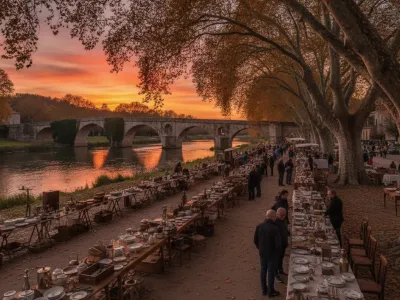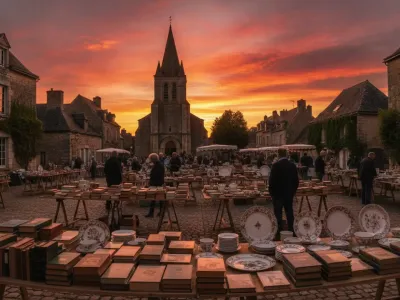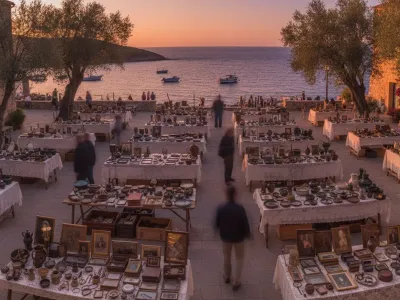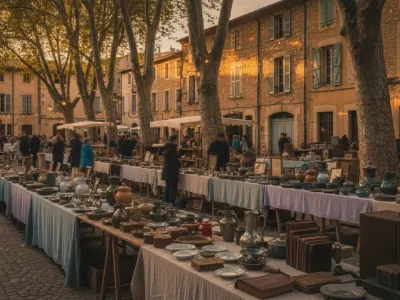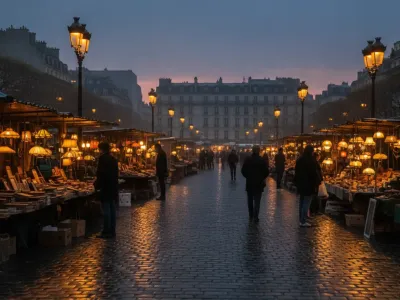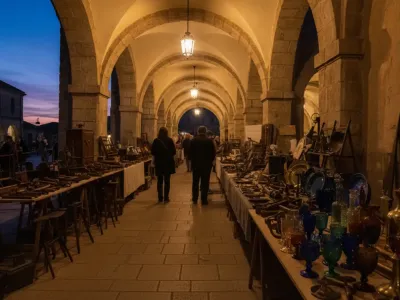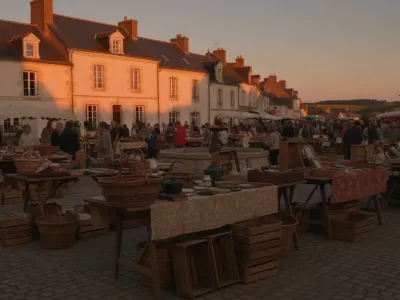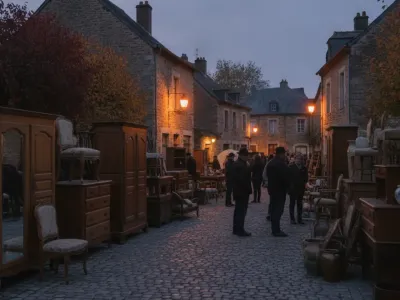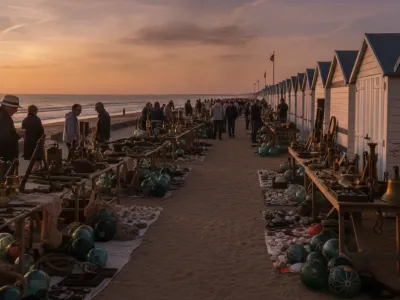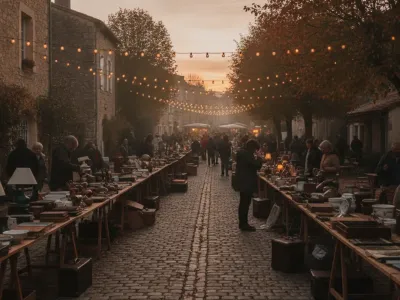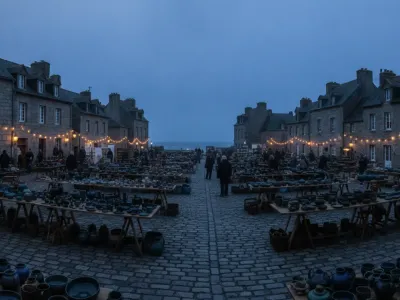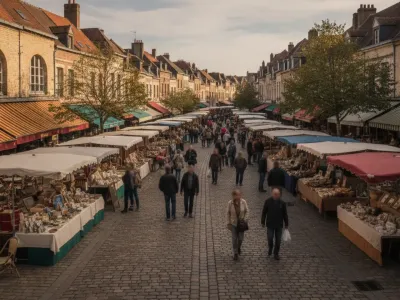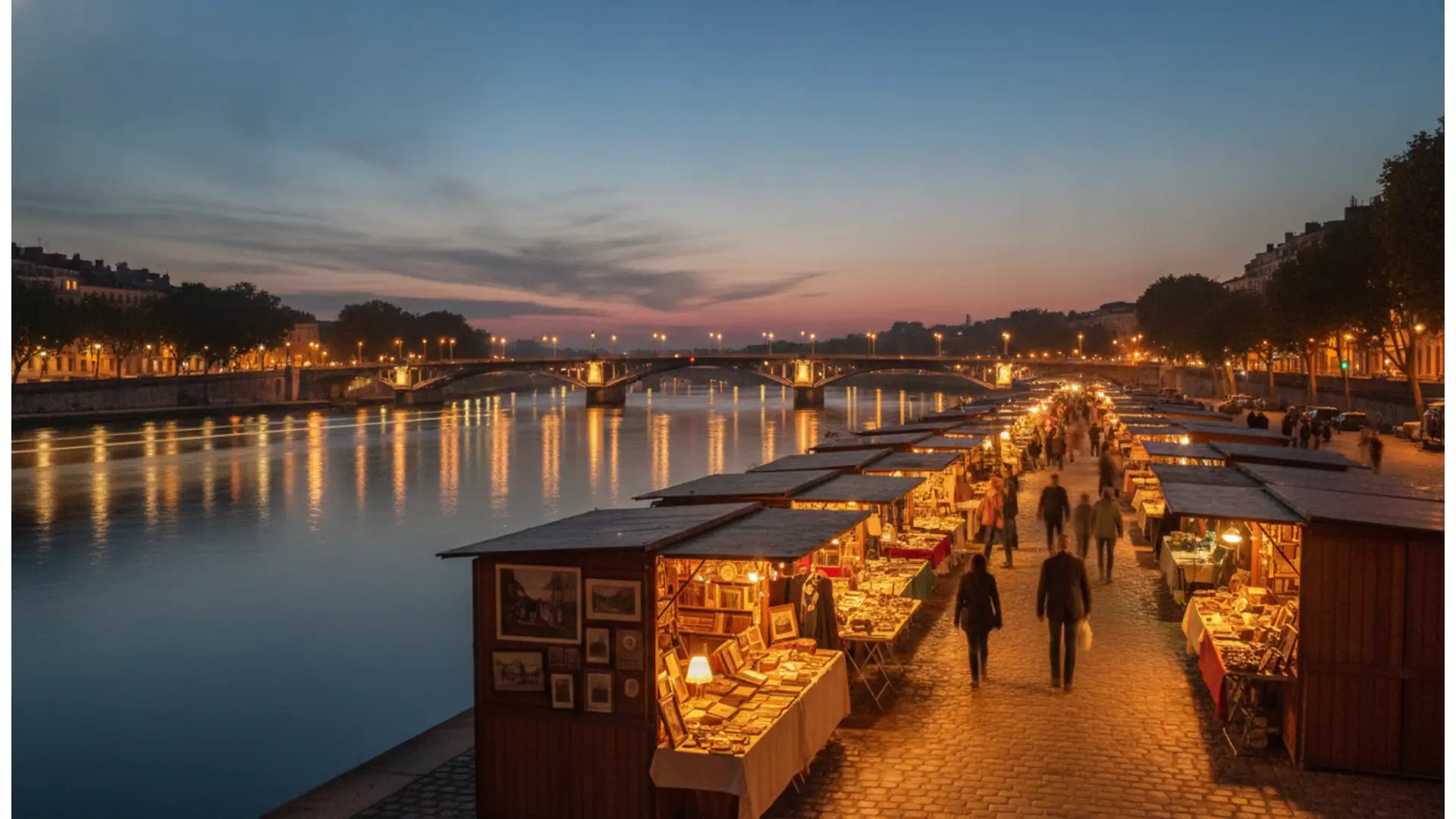
On September 12-13, 2026, flea markets and antique fairs fill Auvergne-Rhône-Alpes: 1,800 sellers expected at the Beaucroissant fair, founded in 1219, while Lyon's Croix-Rousse marks its 42nd street sale.
Thirty hectares, in Isère, from Saturday dawn.
Beaucroissant, in Isère, opens the weekend's biggest antique fair. A gathering eight centuries old. On September 12-13, 2026, flea markets and antique fairs fill Auvergne-Rhône-Alpes: 1,800 sellers expected at the Beaucroissant fair, founded in 1219, while Lyon's Croix-Rousse marks its 42nd street sale.
The Beaucroissant fair, eight centuries of history
Founded in 1219, the Beaucroissant autumn fair claims the rank of the region's oldest trade fair. Long before the word antique meant anything here. It spreads across the village from September 11 to 13, on more than thirty hectares of open ground.
This September edition is the largest of the annual gatherings Beaucroissant holds all year. Few fairs keep that pace. Between 1,500 and 1,800 sellers set up across farm machinery, public works gear, livestock, crafts and food stalls. A sizeable antiques and flea market section fills its own corner, among old furniture, tableware and collectible tools.
No other stop in the region comes close to this scale. Tens of thousands of visitors are expected across the whole weekend, a figure no other regional flea market gathering reaches. Sunday stays, as every year, the busiest day.
The rest of the weekend, from Lyon to Puy-de-Dôme
Lyon and Clermont-Ferrand play the urban card. The Croix-Rousse street sale takes over the hillside and streets of Lyon's 4th district for its 42nd edition, running since 1985, with 250 permanent sellers, makers and antique dealers combined. Free entry, as always. In Clermont-Ferrand, the Salins flea market holds Place Gambetta every single Sunday of the year, with 150 regular sellers and up to 10,000 visitors, the busiest weekly antique fair gathering in the Auvergne.
Twenty-five years, two villages in Isère. The Bourg-d'Oisans car boot sale marks its 25th edition with 250 sellers filling the village centre, from 7:30am to 5:30pm. Booking required, at 4.50 euros per linear metre. Same day, same round number, over in Barraux. The Barraux flea market, in the Grésivaudan valley, expects a comparable crowd of hunters for its Twinning Committee organisers, at the same rate as Bourg-d'Oisans. Passy, in Haute-Savoie, plays a different card. Its Chedde car boot sale only runs twice a year, on May 1st and September 13, with 200 to 300 sellers on the old football pitch. Pitches cost 5 euros per linear metre.
The second Sunday of the month governs three other, smaller gatherings. In Montmarault, in the Allier, the stamp and postcard fair brings together stamps, old postcards, coins and rare collector pieces over two days. Seasoned collectors and dealers mix freely. Under Bourg-en-Bresse's covered market, about thirty professional dealers hold their BrocenBresse monthly flea market, from 8am to 6pm. Free entry, with furniture, trinkets and postcards refreshed at every edition. Feurs, meanwhile, leans on its Roman roots. Founded under the name Forum Segusiavorum, the former Forez capital pairs its flea market and craft market on the same day, in a remarkable heritage setting. On September 13, 2026, Poule-les-Écharmeaux, a hillside village in the Haut-Beaujolais on the border of the Rhône and Saône-et-Loire, holds its annual car boot sale, drawing local sellers and visitors from neighbouring villages.
On the Croix-Rousse hillside, every street keeps its own theme for the two days of the sale.