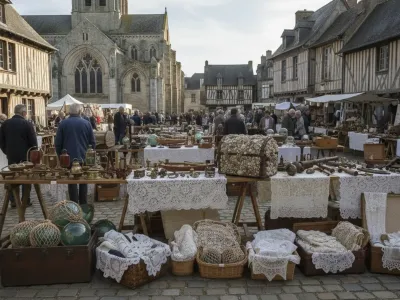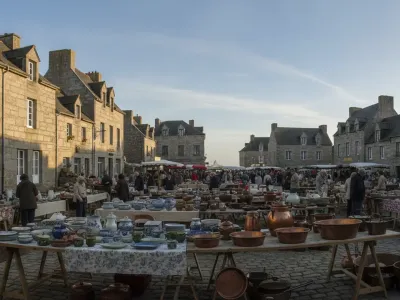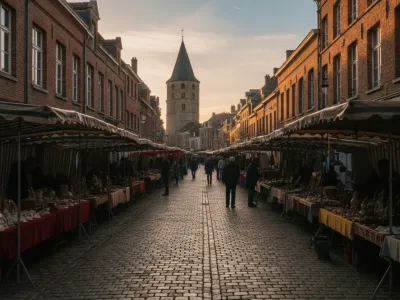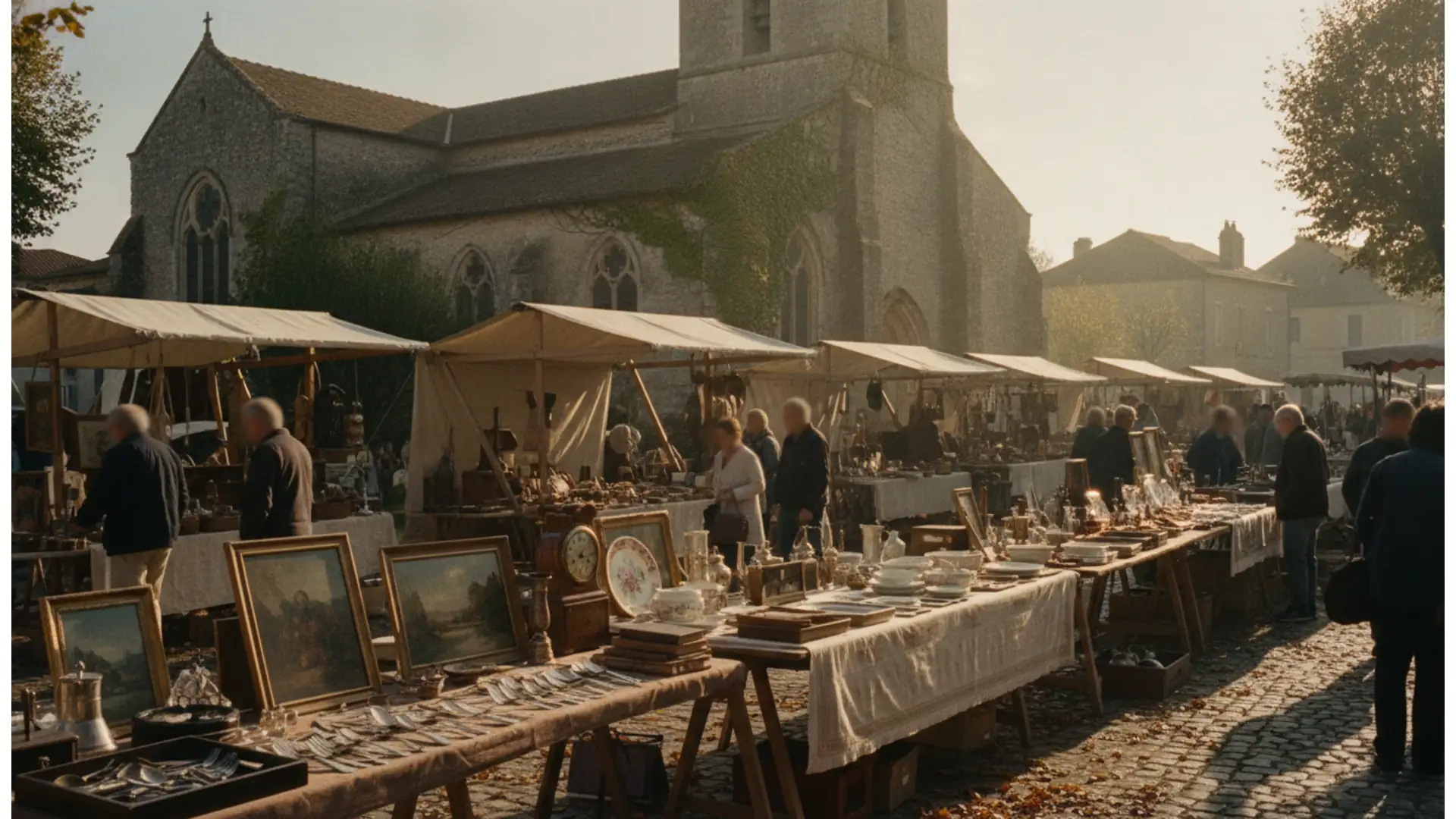
On the weekend of September 19 and 20, 2026, the Mega Puces flea market in Guilherand-Granges gathers 350 sellers across four acres, while about ten flea markets and antique fairs animate France, from the Somme to Brittany.
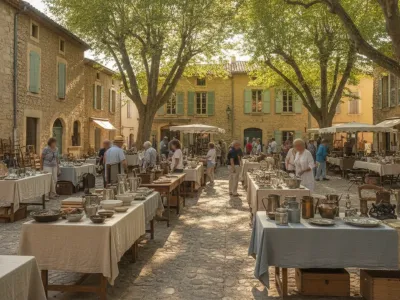
Ten events, ten départements. The weekend of September 19 and 20, 2026 (9/19-20), they stretch from the Ardèche to Brittany. The Mega Puces of Guilherand-Granges alone bring together 350 sellers across four acres, while about ten flea markets and antique fairs animate the rest of France. A nation of bargain hunters, north to south. Each with its own scale and its own story.
The Mega Puces of Guilherand-Granges
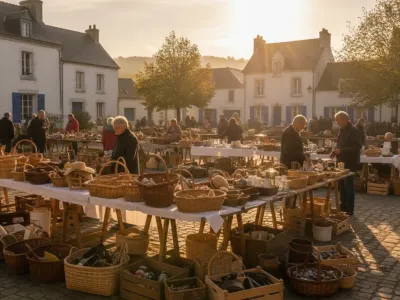
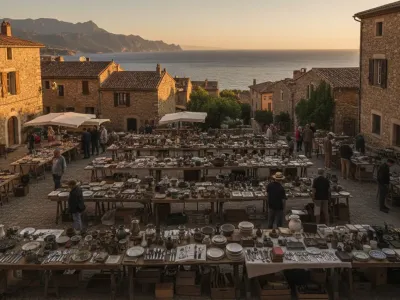
Every third Sunday of the month, the Stade Mistral Nord in Guilherand-Granges, on the Ardèche bank of the Rhône, turns into a vast flea market ground. Four acres. On September 20, 2026, up to 350 professional and private sellers spread out across it, among antiques, secondhand goods, flea-market finds and all sorts of other items.
The market is a reference point for pickers and dealers across the northern Ardèche. Open from 6am to 1pm, it draws antique dealers hunting a specific piece as much as households clearing out an entire attic in one morning, bag in hand. Two very different crowds, one same stretch of tarmac.
The calendar works in its favor this year. The third Sunday of September falls right on the 20th, squarely inside the target weekend, which is not the case for every monthly market in the region. Worth the detour.
The name, Mega Puces, is no exaggeration for a monthly gathering of this size, right on the riverbank.
The rest of the weekend, from the Somme to Brittany
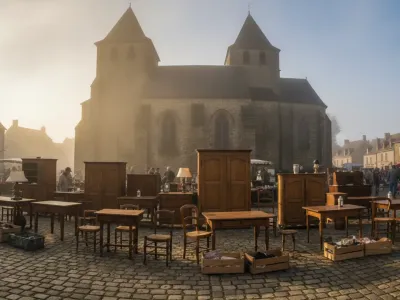
Three fairs dominate by sheer size this weekend. In the Somme, the Salouël rederie brings together about 700 sellers over 2,300 linear meters, open to both private sellers and professionals except for food vendors, one of the biggest rederies in the département after Amiens itself. Nothing like a small village market. In Charente, the Association des Fêtes de Plaisance gathers more than 300 sellers, private and professional, on the Esplanade de Plaisance for the autumn flea market of Barbezieux-Saint-Hilaire, the second big fair of the year in the area. In Côte-d'Or, the association L'Aile et la Cuisse runs the Nuits-Saint-Georges car boot sale over two days, about 200 sellers between covered halls and the Jardin des Buttes, free entry with no registration.
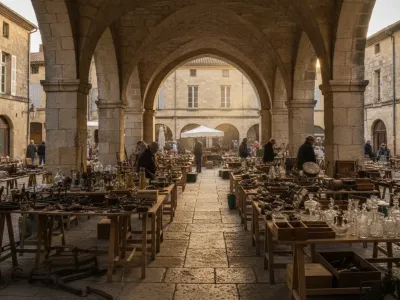
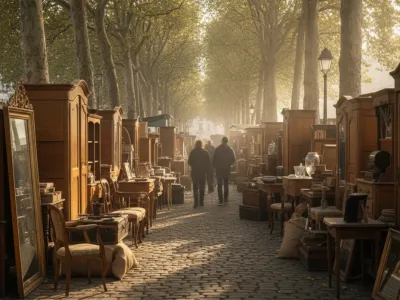
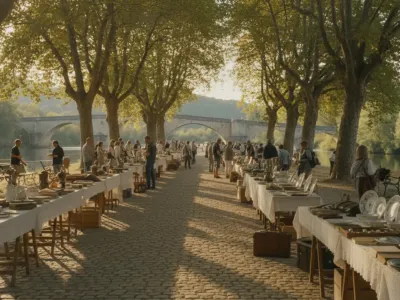
Other gatherings go back further. In Paris, the Porte de Montreuil flea market keeps a nineteenth-century tradition alive with about 300 sellers every Saturday, Sunday and Monday, a haven for cheap vintage clothing, bric-à-brac and secondhand tools, less touristy than Saint-Ouen. A nearly constant rhythm. In Touraine, about 75 professional dealers run the Rabelaisian flea market of Chinon along the shaded Docteurs Mattrais promenade by the Vienne river, with old furniture, faience, decorative items and curiosities. The setting changes, the spirit stays. In Rezé, near Nantes, about a hundred professional sellers, gathered by organiser Dimexpo, fill the covered MIN market hall for its monthly antiques flea market, sheltered from the weather.
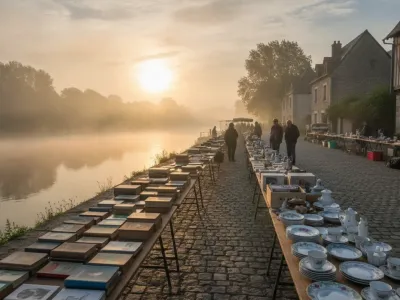
Three last events, three different moods. In Gap, on Boulevard d'Orient, the Tokoro car boot sale gathers about 200 sellers for the benefit of hospitalised children at the local hospital, one of the biggest events of its kind in the Hautes-Alpes. In Brittany, the Lamballe pétanque club car boot sale holds its yearly event in a shopping centre car park, between 100 and 200 sellers welcomed from 5:30am, food and drinks on site. A symbol more than a figure. In the Village du Livre, the Amis du Livre association ties the book and heritage market of Fontenoy-la-Joûte to the European Heritage Days, between eleven permanent shops and about ten guest professional sellers.
The MIN market in Rezé returns every third Sunday of the month, in the same covered hall.